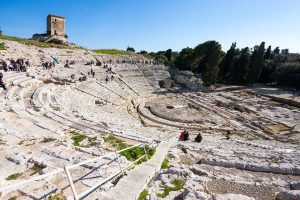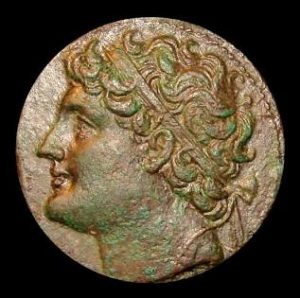
The event involving King Hiero II of Syracuse and his legendary crown took place during the 3rd century BCE, likely around 250 BCE. Syracuse was a powerful Greek city-state located in Sicily, and Hiero II was its prominent ruler. This era was marked by significant advancements in Hellenistic science and mathematics, making the city a hub of intellectual activity. It was during this period of relative prosperity that the king commissioned a highly specific—and ultimately controversial—piece of jewelry to serve as a votive offering for a local temple.
The investigation was triggered by the king’s deep suspicion of royal fraud. King Hiero had supplied a local artisan with a specific weight of pure gold to forge the crown, which was shaped like a laurel wreath. When the finished piece was delivered, it weighed exactly what the initial raw gold had weighed. However, rumors quickly circulated that the goldsmith had embezzled a portion of the precious gold, secretly replacing it with an equal weight of less valuable silver. Because the crown was a sacred object dedicated to the gods, the king could not simply melt it down or cut it open to check its purity; he needed an ingenious way to verify the material without damaging the artifact.
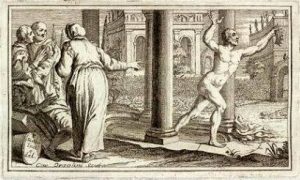
To solve this puzzle, the king turned to the brilliant polymath Archimedes. The breakthrough famously came to the scholar while he was stepping into a public bath. He noticed that the water level rose as his body entered the tub, realizing that the volume of displaced water was directly proportional to the volume of the submerged object. Because gold is significantly denser than silver, a crown made of pure gold would take up less physical space—and therefore displace less water—than a crown of the exact same weight mixed with lighter, bulkier silver. Archimedes reportedly leapt from the bath and ran naked through the streets shouting “Eureka!” (I have found it!), knowing he could use this displacement method to measure the crown’s true volume.
When Archimedes conducted his formal test, the results definitively proved the king’s suspicions. He took a lump of pure gold and a lump of pure silver, both matching the exact weight of the crown, and submerged them in water to measure their respective displacements. When the crown itself was submerged, it displaced more water than the solid lump of pure gold, indicating that its volume was greater and its density was lower than it should have been. The test confirmed that the crown was indeed a fake, adulterated with silver, and the deceitful goldsmith was punished for his crime.