Michael Faraday was born in 1791 into immense poverty because his father, a blacksmith, suffered from chronic ill health and could rarely work enough to support his four children. Because his family could not afford extensive formal schooling, Faraday’s education was limited to basic reading and math before he had to drop out at age thirteen to earn a wage. However, rather than saving money to pay for traditional tuition, Faraday found a way to get paid while he learned: he took a job as a bookbinder’s apprentice. He spent the next seven years eagerly reading the scientific texts he was tasked with binding, effectively transforming the bookshop into his own private university. He then used his meager apprentice wages to buy cheap scrap materials to build basic chemical and electrical apparatuses to test what he was reading.
Faraday is known today as one of the most brilliant experimental scientists in history—a reputation he built entirely through relentless self-education and sheer audacity. His major career break came when a customer, impressed by the young apprentice’s scientific curiosity, gifted him tickets to see the eminent chemist Humphry Davy lecture at the Royal Institution. Faraday took meticulous notes, bound them beautifully into a 300-page book, and sent them to Davy as an application of sorts; this bold move eventually earned him a job as Davy’s laboratory assistant. Once inside a real laboratory, Faraday’s natural genius blossomed, and he became famous for his unparalleled ability to visualize unseen physical forces, fundamentally establishing the concepts of the electromagnetic field.
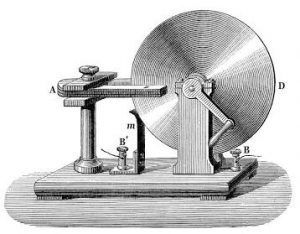
His crowning achievements were inventions that harnessed these invisible forces and quite literally powered the modern world: the electric motor and the electrical generator. In 1821, Faraday invented the first electric motor by demonstrating electromagnetic rotation, proving that electricity could be converted into continuous mechanical motion. A decade later, he discovered electromagnetic induction and built the Faraday disk (pictured above), the world’s first electrical generator, which proved that moving a magnet near a wire could produce a steady electrical current. These two breakthroughs completely transformed society, laying the foundation for everything from the power grids that light our homes to the engines inside modern electric vehicles.