There is actually a common historical misconception about the timeline of nylon’s creation. Wallace Carothers wasn’t racing against the outbreak of World War II—he invented nylon in 1935 and tragically passed away in 1937, years before the U.S. entered the conflict. However, his monumental breakthrough became one of America’s most critical military assets when the war severed access to Japanese silk.
Here is the story of the brilliant chemist and the material that changed the world.
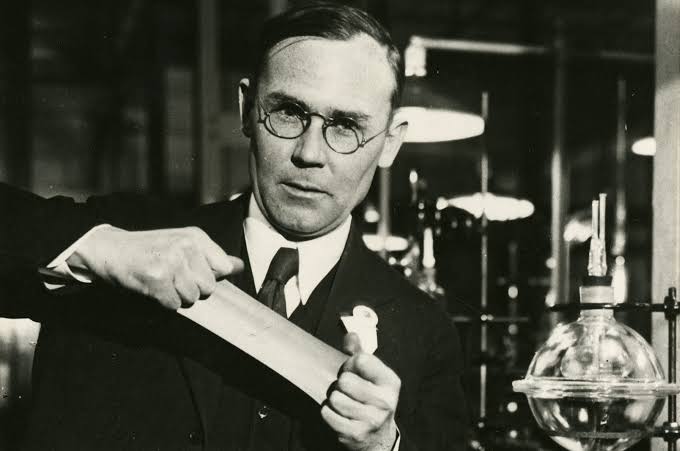
The Reluctant Corporate Scientist
In 1928, the chemical giant E.I. du Pont de Nemours and Company (DuPont) decided to fund pure scientific research—a rarity for a corporation at the time. They lured Wallace Carothers, a 32-year-old chemistry instructor at Harvard, to lead their new laboratory in Wilmington, Delaware. Carothers suffered from severe depression and often doubted his own abilities, but DuPont offered him a massive budget and the freedom to study whatever he wanted.
Carothers focused on polymers—giant molecules made of long chains of repeating units. At the time, many scientists didn’t believe these massive chain molecules actually existed. Carothers not only proved they did, but he set out to build them artificially in the lab.
The Breakthrough: Polymer 6-6
After years of trial, error, and nearly abandoning the project, Carothers’ team made a breakthrough in 1935. By combining two chemicals (hexamethylenediamine and adipic acid—both containing six carbon atoms), they created “polymer 6-6.”
When melted, this substance could be drawn out into long, fine threads that, once cooled, were exceptionally strong and elastic. It was the world’s first entirely synthetic fiber. DuPont later named it nylon.
The “Nylon Riots” of 1940
DuPont initially targeted the hosiery market. Women’s stockings at the time were made of sheer, expensive silk imported from Japan, which was fragile and prone to running.
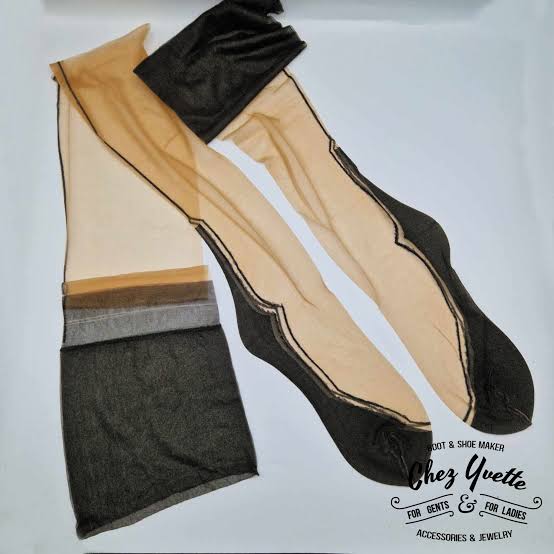
When DuPont publicly released nylon stockings in May 1940, the response was unprecedented. Marketed as being “as strong as steel, as fine as a spider’s web,” they sold out within hours. In some cities, crowds of women practically rioted to get their hands on a pair, buying 64 million pairs in the first year alone.
Drafted for the War Effort
The civilian nylon craze was short-lived. Following the attack on Pearl Harbor in December 1941, the military desperately needed silk for parachutes, tow ropes, tents, and bomber tire cords. The war in the Pacific had completely cut off the supply from Japan.
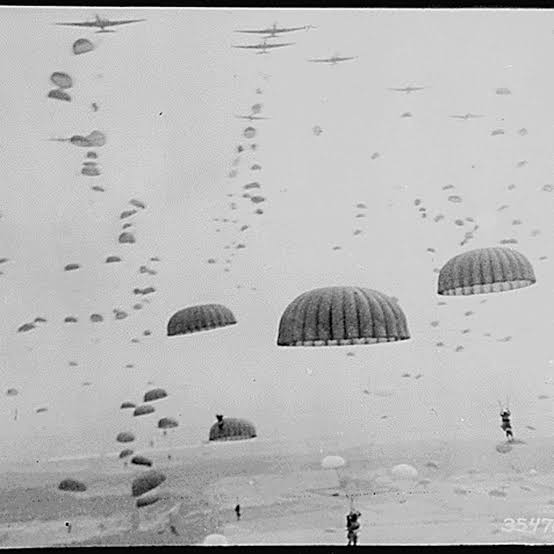
Overnight, DuPont shifted its entire nylon production to the war effort. Nylon actually proved superior to silk for parachutes—it was more elastic, incredibly strong, and highly resistant to mildew and moisture. Civilian stockings disappeared from shelves, leading many women to literally paint seams down the backs of their bare legs to mimic the look of nylons.
A Tragic Legacy
Despite revolutionizing materials science and laying the groundwork for the modern plastics industry, Wallace Carothers did not live to see the success of his invention. Battling worsening depression and the sudden death of his favorite sister, Carothers took his own life in a Philadelphia hotel room in April 1937, at the age of 41.
Today, he is remembered not just as a brilliant chemist, but as the father of synthetic polymers. For a brief visual look at his life and the tragedy of his passing before nylon changed the world, this summary covers his story: https://www.youtube.com/watch?v=lB4mK1wyztw