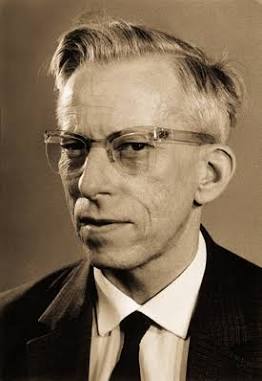
Otto Wichterle (1913–1998) was a renowned Czech chemist and inventor whose pioneering work in polymer science led to the invention of modern soft contact lenses. Despite facing significant political and financial obstacles throughout his career in a turbulent 20th-century Czechoslovakia, his innovations revolutionized vision correction and laid the groundwork for the use of synthetic biomaterials in medicine.
Early Life and Education
Wichterle was born on October 27, 1913, in Prostějov, Moravia (then part of the Austro-Hungarian Empire). He developed an early interest in science and medicine and eventually enrolled at the Chemical and Technological Faculty of the Czech Technical University in Prague. He earned his doctorate in organic chemistry in 1936 and submitted a second doctoral thesis in 1939. However, the German occupation of Czechoslovakia forced the closure of universities, prompting him to leave academia and join the research institute at the Baťa shoe company in Zlín.
Key Inventions
Silon (Synthetic Fiber)
During his time at the Baťa research institute in 1941, Wichterle and his team developed a method to spin a synthetic polyamide fiber. This material, named silon, was developed independently of the American invention of nylon. Due to the need to conceal the invention from the Nazi occupiers and post-war industrial challenges, silon did not enter mass production until nearly a decade later.
The Soft Contact Lens
Following World War II, Wichterle returned to academia, focusing his research on cross-linking hydrophilic (water-absorbing) gels that could remain in permanent contact with living tissue. In 1953, alongside his colleague Drahoslav Lím, he patented polyhydroxyethyl methacrylate (pHEMA), a transparent polymer gel capable of absorbing up to 40% water.
Wichterle envisioned using this hydrogel for contact lenses. However, in 1958, he was forced out of the Institute of Chemical Technology due to political purges by the Communist regime. Undeterred, he continued his experiments at home.
On Christmas Day in 1961, working at his kitchen table with his wife, Linda, Wichterle successfully produced the first soft hydrogel contact lenses. His ingenious, makeshift apparatus was constructed using:
- A Merkur children’s construction set (similar to an Erector set).
- A bicycle dynamo belonging to his son.
- A bell transformer and a motor salvaged from a gramophone.
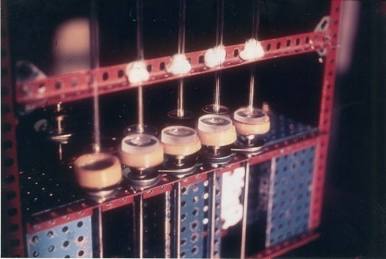
This spin-casting method used centrifugal force to shape the liquid polymer into a perfect optical curve. Over the next four months, he and his wife produced 5,500 prototype lenses using these rudimentary machines.
Political Challenges and Legacy
Without Wichterle’s knowledge, the Czechoslovak state sold the international patent rights to his spin-casting process, which eventually resulted in mass production by companies like Bausch & Lomb in the United States. Consequently, Wichterle made very little money from his transformative invention.
Wichterle was continually marginalized by the totalitarian regime for his outspoken views, including his support of the “Two Thousand Words” manifesto during the Prague Spring of 1968. Full recognition in his home country only arrived after the Velvet Revolution in 1989. In 1990, at the age of 76, he was elected President of the Czechoslovak Academy of Sciences.
He passed away on August 18, 1998, leaving behind a legacy of nearly 200 patents and 200 scientific publications. Today, his pioneering work is the foundation for an industry that provides vision correction to over 100 million people worldwide.