Margaret Eloise Knight
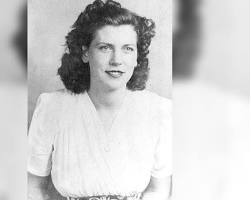
Margaret Eloise Knight, often referred to as “the most famous 19th-century woman inventor” and sometimes as the “woman Edison”, was an American inventor celebrated for her groundbreaking contributions to industrial machinery. She is best known for inventing a machine that automated the production of flat-bottomed paper bags, a design still widely used today. Over the course of her life, Knight obtained at least 27 patents and conceived approximately 90 different inventions.
Early Life and First Invention
- Birth and Childhood: Margaret Eloise Knight was born on February 14, 1838, in York, Maine. She was the daughter of Hannah Teal and James Knight. From a young age, she demonstrated a knack for woodworking tools and enjoyed making sleds, kites, and toys for her brothers.
- Textile Mill Work: Following the death of her father, her family moved to New Hampshire, and Knight left school to work in a cotton mill at just 12 years old to help her mother financially.
- First Invention: While working at the mill, she observed an accident where a steel-tipped shuttle came loose from a loom at high speed. This inspired her to develop her first invention, a safety device that acted as a shuttle restraint system to prevent worker injuries. By the time she was a teenager, the device became widely used across the country. However, because she was young and unaware of the patent system, she did not receive any compensation for this safety mechanism.
The Flat-Bottomed Paper Bag Machine
- Inspiration: Following the Civil War, Knight relocated to Massachusetts. In 1867, she began working at the Columbia Paper Bag Company in Springfield, Massachusetts. At the time, machine-made paper bags were shaped like envelopes, which made them weak, narrow, and unable to stand upright. Sturdier flat-bottomed bags existed but had to be manufactured expensively by hand.
- The Invention: Recognizing a need for automation, Knight invented a machine in 1868 that could automatically feed, cut, fold, and glue paper to form flat-bottomed, square-based bags. Her machine could perform the work of 30 people.
- Patent Dispute: Remembering her uncompensated first invention, Knight sought to patent her bag-making machine. She traveled to Boston in 1869 to oversee the construction of an iron prototype needed for the patent application. During this time, a machinist named Charles Annan observed her machine and subsequently attempted to steal the design by patenting it himself.
- Legal Victory: When Knight attempted to file her patent in 1870, she discovered Annan’s theft and launched a patent interference lawsuit against him. Annan argued that a woman was incapable of understanding the mechanical complexities of the machine. Knight decisively refuted this sexist claim by presenting copious evidence, including meticulous hand-drawn blueprints, models, journals, and witness testimonies proving she had been developing the machine since 1867. She won the 16-day hearing and officially received her patent in 1871.
Later Career and Legacy
- Business Ventures: Following her legal victory, Knight co-founded the Eastern Paper Bag Company in Hartford, Connecticut.
- Other Inventions: Knight continued to invent late into her life, ultimately securing patents across a wide array of fields. Her patented innovations included a numbering machine, window frames and sashes, a sole-cutting machine for shoemaking, a compound rotary engine, a dress and skirt shield, and improvements to internal combustion engines, such as the sleeve-valve automotive engine.
- Honors and Recognition: For her achievements, Knight was named a chevalier of the Royal Legion of Honour in 1871. In 2006, she was posthumously inducted into the National Inventors Hall of Fame.
- Death and Legacy: Margaret Eloise Knight passed away on October 12, 1914, in Framingham, Massachusetts. She never married or had children, dedicating her life to her work and establishing herself as a symbol of women’s empowerment in an era when few women held intellectual property.