It sounds like a myth or a piece of science fiction: the idea that an ordinary, bulky, cathode-ray tube (CRT) television sitting in a 1990s living room could act as a window into the creation of the universe. Yet, it is an absolute scientific fact.
To understand how a household appliance could pick up signals from 13.8 billion years ago, we have to look at the relationship between the birth of the cosmos and the way analog technology receives information. It requires a slight shift in how we think about “light,” but once you see the connection, television static becomes one of the most profound visuals in modern science.
The Echo of the Big Bang
When we say a TV picks up “light” from the universe’s creation, we are technically talking about electromagnetic radiation. Visible light (the colors we can see) is just one small slice of the electromagnetic spectrum, which also includes X-rays, radio waves, and microwaves.
Roughly 13.8 billion years ago, the universe began with the Big Bang. About 380,000 years after this initial expansion, the universe cooled down just enough for the first atoms to form. This event allowed light to finally travel freely through space for the first time.
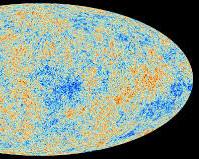
Originally, this light was blindingly bright and incredibly hot. However, as the universe expanded over billions of years, space itself stretched. As space stretched, the wavelengths of this ancient light stretched with it, cooling down and dropping out of the visible spectrum. Today, this leftover glow has stretched all the way into the microwave and radio wave range.
Scientists call this the Cosmic Microwave Background (CMB). It is an invisible sea of radiation that permeates every single inch of the universe, washing over Earth from all directions, at all times.
The Antenna: Catching Invisible Waves
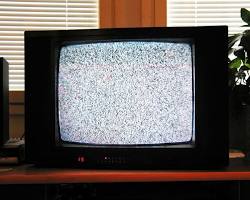
This is where your old CRT television comes in. Analog TVs were essentially just highly sensitive radio receivers attached to a display screen.
- The Broadcast: Television stations transmitted their programs using specific frequencies of radio waves.
- The Receiver: Your TV’s antenna (those “rabbit ears” on top of the set) was designed to catch these electromagnetic waves out of the air.
- The Translation: The TV’s internal circuitry would take that specific wave, amplify it, and fire a stream of electrons from the cathode ray tube against a phosphor-coated screen to draw the moving picture.
But what happened when you tuned the TV to a “dead” channel—a frequency where no local station was broadcasting?
Instead of receiving a clean, organized signal from a broadcast tower, the TV’s antenna simply picked up the ambient electromagnetic noise bouncing around the atmosphere. It acted like a microphone left on in a crowded room, picking up a chaotic mix of signals.
Translating the Cosmos into Static
When tuned to a dead channel, the TV attempted to interpret this chaotic electromagnetic noise as a video signal. The result was the familiar, frenzied dance of black and white dots we call “snow” or “static,” accompanied by a harsh hissing sound.
Most of that static was generated by mundane sources:
- Thermal noise from the TV’s own internal electronics.
- Interference from local power lines and household appliances.
- Radio waves from terrestrial weather, like lightning storms.
- Radiation from our sun and the center of the Milky Way.
However, scattered within that localized noise was the faint, ancient signal of the Cosmic Microwave Background. Roughly 1% of the static on an untuned analog TV was the direct result of the CMB. The television’s antenna was catching the stretched-out, 13.8-billion-year-old light from the dawn of time, and the CRT was dutifully translating it into a flickering white dot on your screen.
A Relic of the Past
Today, we use digital television signals. Modern TVs are designed to only display a picture if they receive a mathematically perfect digital code. If there is no signal, or if the signal is pure noise, a modern TV simply displays a blank blue or black screen. It actively filters out the chaos of the universe.
Because of this, the era of turning on a television and casually watching the echoes of the Big Bang has passed. But it remains a beautiful reminder of how connected we are to the cosmos: for decades, anyone with an analog TV and an antenna was looking directly at the oldest light in the universe.