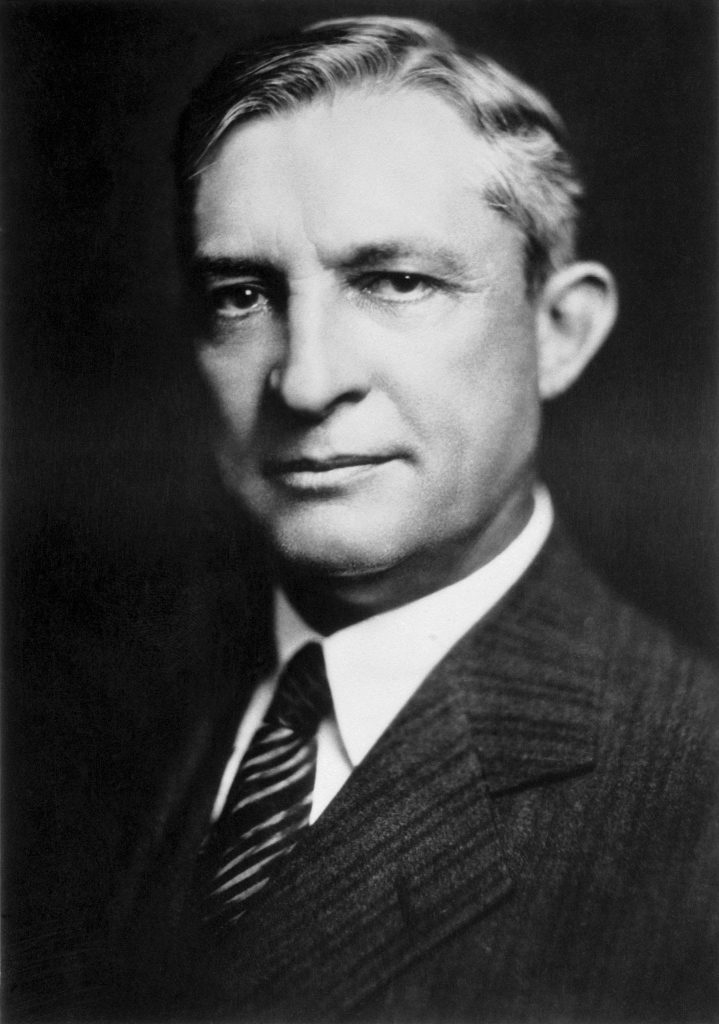
Willis Haviland Carrier (November 26, 1876 – October 7, 1950) was an American engineer, inventor, and industrialist. He is universally recognized as the “father of modern air conditioning” for designing the world’s first scientifically based mechanical air conditioning system in 1902. His inventions not only revolutionized indoor climate control but also profoundly altered global architecture, public health, and industrial manufacturing.
Early Life and Education
Carrier was born on a farm in Angola, New York. He developed a strong aptitude for mathematics and mechanics at an early age, often crediting his mother for teaching him fractions by having him cut apples into varying sizes. Earning a scholarship, he attended Cornell University and graduated in 1901 with a master’s degree in electrical engineering.
Following graduation, Carrier was hired by the Buffalo Forge Company, a manufacturer of heaters, blowers, and exhaust systems, where he was quickly promoted to head their experimental engineering department.
The 1902 Invention
Carrier did not initially set out to invent “comfort cooling” for humans. In 1902, at age 25, he was tasked with solving a persistent problem for the Sackett-Wilhelms Lithographing and Publishing Company in Brooklyn, New York. High summer humidity was causing the paper in their printing presses to expand and contract, misaligning the colored inks during production.
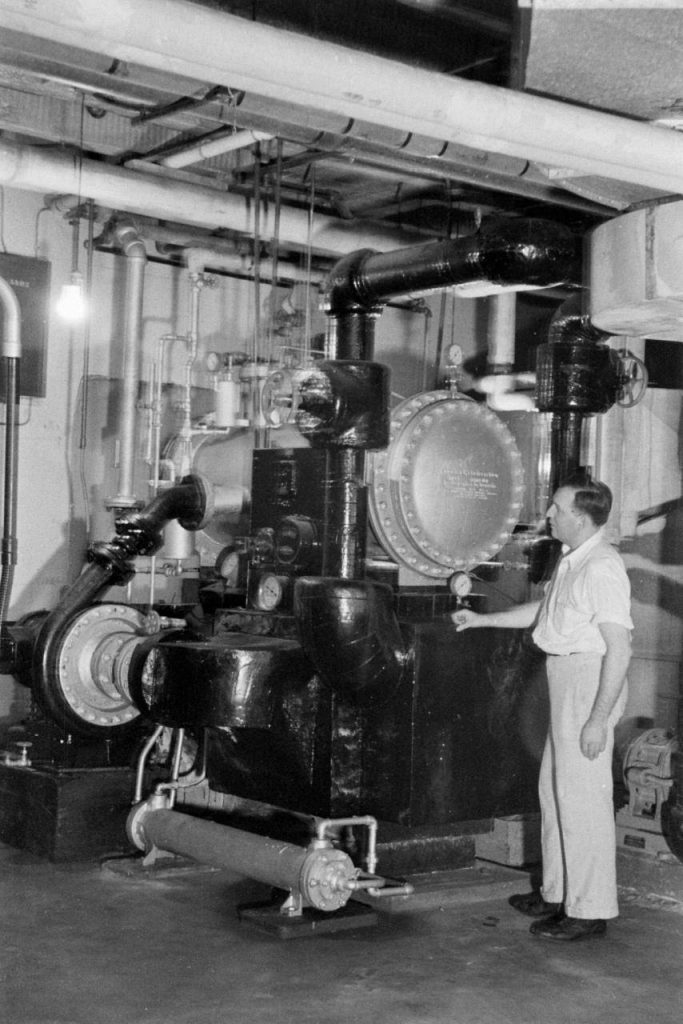
Carrier’s breakthrough was realizing that by controlling humidity, he could simultaneously control temperature. He designed a system that forced air across coils filled with cold water. As the air cooled, it dropped its moisture through condensation (similar to a cold glass sweating on a hot day).
His system was finalized on July 17, 1902, and successfully stabilized both the temperature and the humidity in the printing plant. Carrier later defined modern air conditioning by four core functions:
- Controlling temperature (heating or cooling)
- Controlling humidity (adding or removing moisture)
- Controlling air circulation and ventilation
- Cleansing the air
Scientific Foundations and Carrier Corporation
Carrier recognized that precise calculations were needed to scale his invention. In 1911, he presented his Rational Psychrometric Formulae to the American Society of Mechanical Engineers. This document mathematically correlated temperature, humidity, and the dew point, effectively taking air conditioning from a trial-and-error process into a rigorous scientific engineering discipline. The psychrometric charts he developed remain the basis for HVAC design today.
In 1915, Carrier and six fellow engineers pooled their savings to found the Carrier Engineering Corporation (now Carrier Global Corporation). Under his leadership, the company expanded the use of air conditioning beyond industrial factories (such as textile mills and pharmaceutical plants) into commercial spaces like department stores, movie theaters, and eventually office buildings and homes.
Key Milestones
- Born in Angola, NY
1876
Raised on a farm, Carrier developed an early interest in engineering and mechanics. - The First Air Conditioner
1902
Invented the first mechanical system to control temperature and humidity for a Brooklyn printing plant. - Apparatus for Treating Air
1906
Granted his first major patent for his spray-type air conditioning equipment. - Rational Psychrometric Formulae
1911
Published the foundational scientific formulas that still govern modern HVAC design. - Carrier Corporation Founded
1915
Co-founded his own engineering firm, which became the world’s largest manufacturer of climate control equipment. - Centrifugal Chiller Invented
1921
Patented a more efficient and much safer low-pressure refrigeration machine, paving the way for cooling large commercial buildings like skyscrapers and theaters.