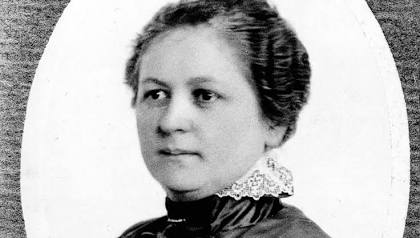
Before 1908, drinking a cup of coffee was often a bitter, gritty experience. The brewing methods of the time—boiling grounds in a cloth bag or using porcelain presses—either left grounds in the cup or over-extracted the coffee, creating a harsh taste. It took the practical ingenuity of a German housewife named Amalie Auguste Melitta Bentz to fundamentally change how the world consumes its daily caffeine, shifting the focus from simply brewing to achieving a clean, flavorful extraction.
The Problem and the Breakthrough
Born in Dresden, Germany, in 1873, Bentz was frustrated by the thick layer of grounds left at the bottom of her coffee cups. Cloth filters were difficult to clean and altered the taste of the brew, while the espresso-like machines of the era were prone to leaving heavy residue.
Driven by a desire for a clean, sediment-free cup of coffee, she began experimenting with different materials in her kitchen. Her breakthrough came from an unlikely source: her son’s school supplies.
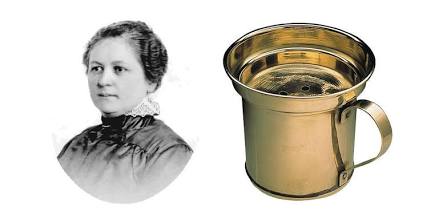
Bentz took a brass pot, punctured a series of holes in its base using a heavy nail, and lined it with a piece of absorbent blotting paper torn from her son Willi’s school exercise book. When she poured hot water over the coffee grounds resting on the paper, the result was a clear, flavorful, and entirely grit-free beverage. The porous paper perfectly captured the bitter oils and grounds while allowing the brewed liquid to drip through.
From Kitchen Experiment to Global Industry
Recognizing the commercial potential of her invention, Bentz moved quickly to protect her intellectual property. On June 20, 1908, the Imperial Patent Office in Berlin granted her a patent for her “Filter Top Device lined with Filter Paper.”
With a starting capital of just 73 pfennigs, she registered her business in December 1908. The company was a family affair from the start: her husband Hugo and her sons Willi and Horst were the first employees, operating out of their Dresden apartment. They presented their innovative filters at the 1909 Leipzig Trade Fair, a massive success that resulted in over 1,200 filters sold and launched a new era of coffee preparation.
Impact and Legacy
Melitta Bentz’s simple, elegant solution revolutionized coffee consumption. By removing the bitter oils and sediment, her invention allowed for the clean extraction of coffee flavors that defines modern drip coffee.
Beyond her inventive breakthrough, Bentz was a pioneering business leader ahead of her time. She provided her factory workers with unprecedented benefits for the era, including Christmas bonuses, increased vacation days, and a five-day workweek, establishing a company culture that prized employee welfare. Today, the Melitta Group remains a massive international corporation, still controlled by her descendants, producing billions of coffee filters annually.
For a deeper look into her life and how she built an empire from a piece of blotting paper, this short documentary covers her journey: https://www.youtube.com/watch?v=g06FcgPbDyk